
Learning from Place: Bdote
The Dakota language is written on the landscape of the Twin Cities
About Learning from Place: Bdote
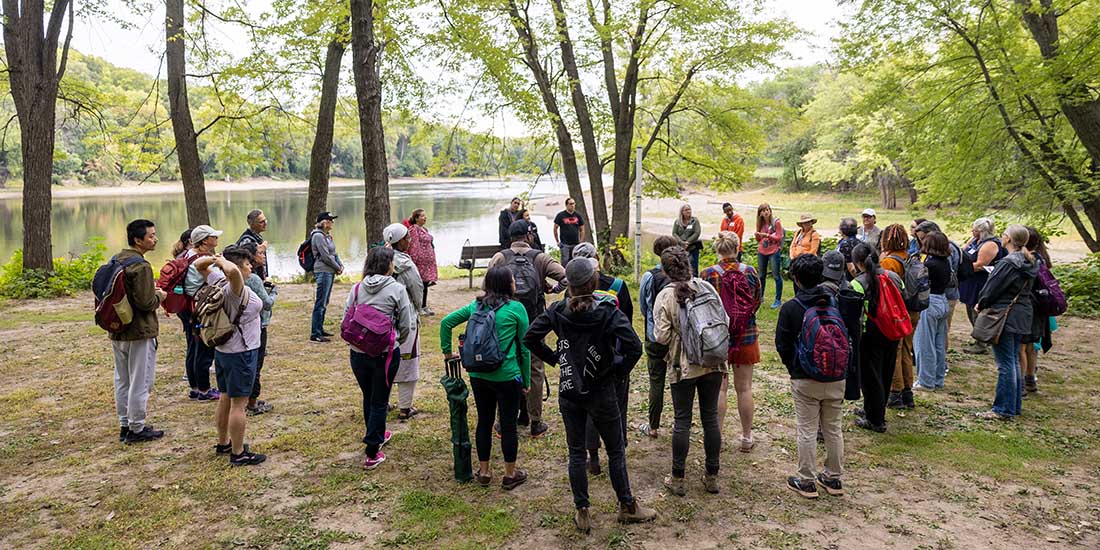
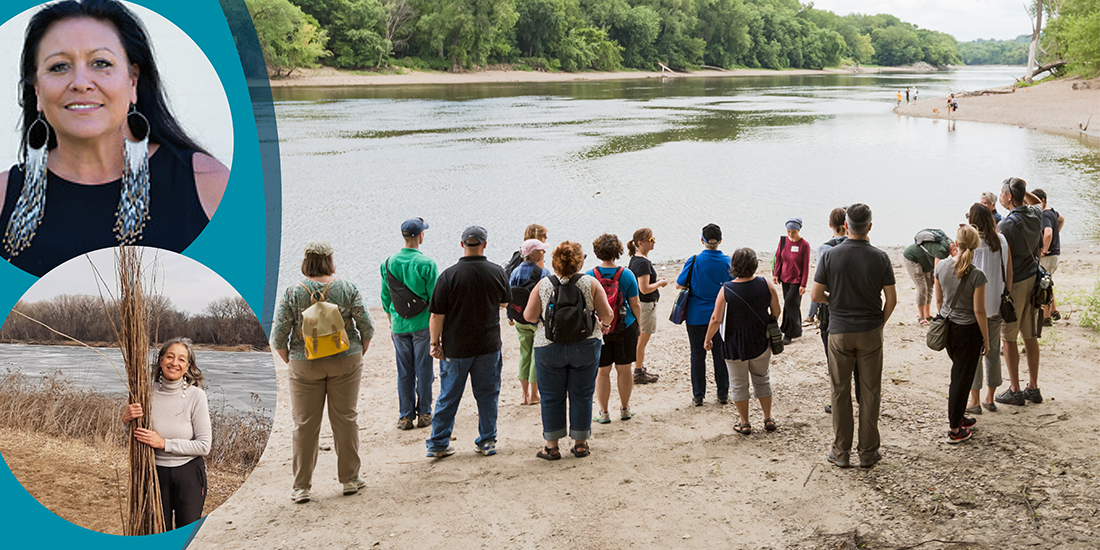
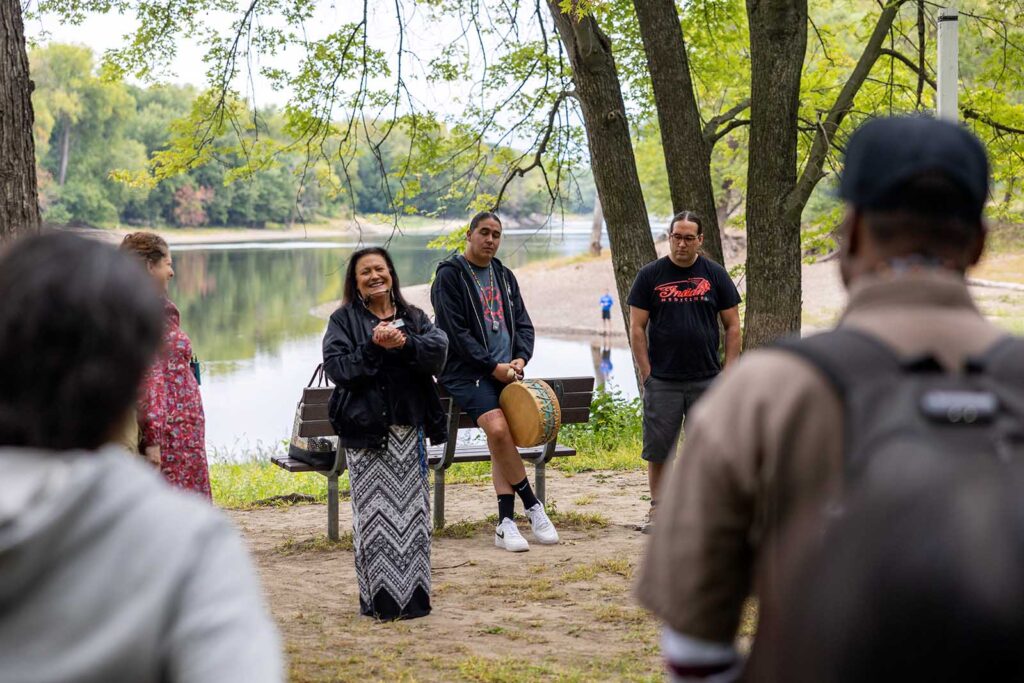
Learning from Place: Bdote is a full-day, immersive, place-based experience led by Dakota community members at sites of deep significance along the Bdote — where the Ȟaȟáwakpa (Mississippi River) and Mnísota Wakpá (Minnesota River) meet, and in the surrounding area that has long been home, a gathering place, and a source of life for Dakota people. Participants learn through story and reflection, engaging with both historical events and contemporary Dakota perspectives often left out of dominant narratives about Minnesota’s past.
Rather than visiting many locations in a single day, this experience focuses on spending more time at each site, allowing participants to listen, ask questions, and reflect.
This experience is open to the general public and is particularly beneficial for educators, nonprofit professionals, public servants, and others seeking to deepen their understanding of Minnesota history and engage more thoughtfully with Dakota perspectives.
Participants provide their own transportation, lunch, snacks, and beverages. Parking fees may apply at Fort Snelling State Park.
K–12 educators will receive 5 clock hours.
|
Questions? Contact Eden Bart |
Honoring 10 Years of Learning from Place: Bdote
Watch Learning from Place: Bdote, a video produced in 2023 to honor 10 years of this powerful program.
List of events in Photo View
|
Private Bdote Trips MHC offers a limited number of private Bdote experiences for organizations seeking to engage deeply with Dakota perspectives and strengthen relationships with Dakota communities. These trips are designed to support meaningful reflection and inspire positive action. Organizations interested in a private 2026 Bdote experience are encouraged to review trip details and complete an application. Learn More |
Sites Visited
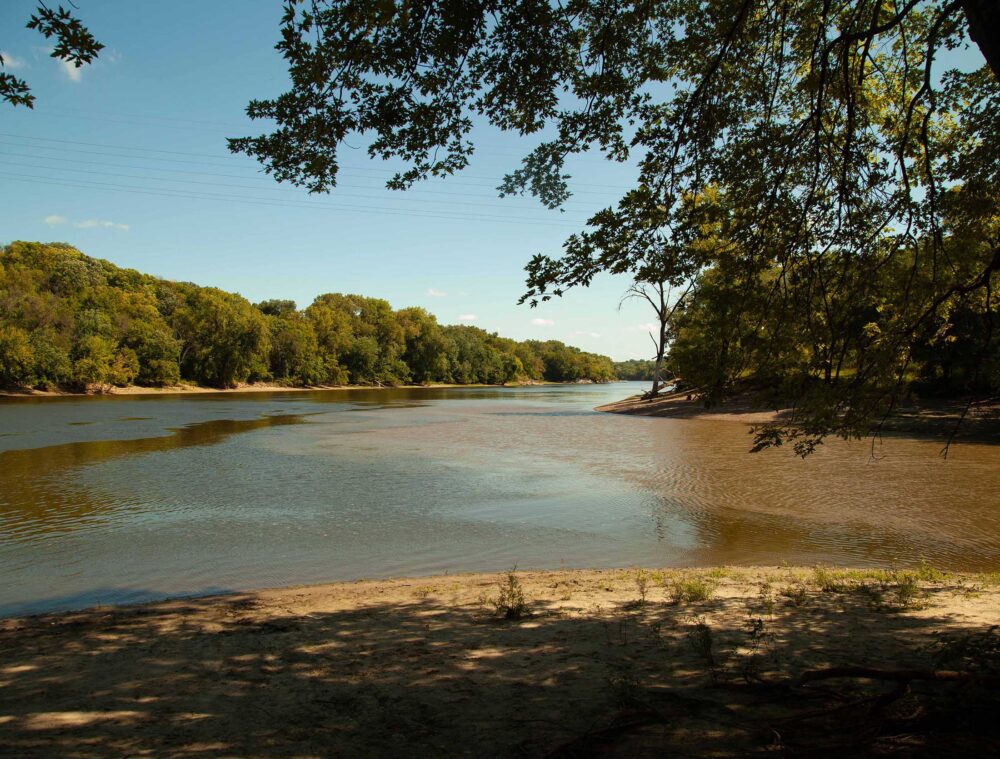
Bdote (pronounced: ba-DOTE-tay; Fort Snelling State Park)
A place central to Dakota creation stories and history. It is also the site where more than 1,600 Dakota women, children, and elders were held following the U.S.–Dakota War of 1862.
Wic̣aḣapi (pronounced: we-CHA-ha-pee; formerly Indian Mounds Regional Park)
A sacred burial place with deep significance to the Dakota, Ho-Chunk, and Ioway nations. In May 2025, the City of Saint Paul officially renamed Indian Mounds Regional Park to Wic̣aḣapi (Dakota cemetery) and the surrounding cultural landscape—including Bruce Vento Nature Sanctuary—to Imniżaska (pronounced e-me-NE-zha-ska; white cliffs), honoring Dakota sacred history. Ongoing updates include improved cultural signage, trail renovations, and efforts to preserve the burial mounds.
Outcomes
Participants can expect to leave the experience with:
A deeper understanding of Dakota people’s relationship to Minnesota and to Bdote as both a specific place and a broader homeland.
Greater awareness of how exclusion from historical narratives continues to impact Dakota individuals and communities today.
Increased reflection on one’s own conscious and unconscious biases.
Tools and resources to engage students, colleagues, or community members in a fuller, more accurate history of Minnesota and the Twin Cities.
2026 Content Leads
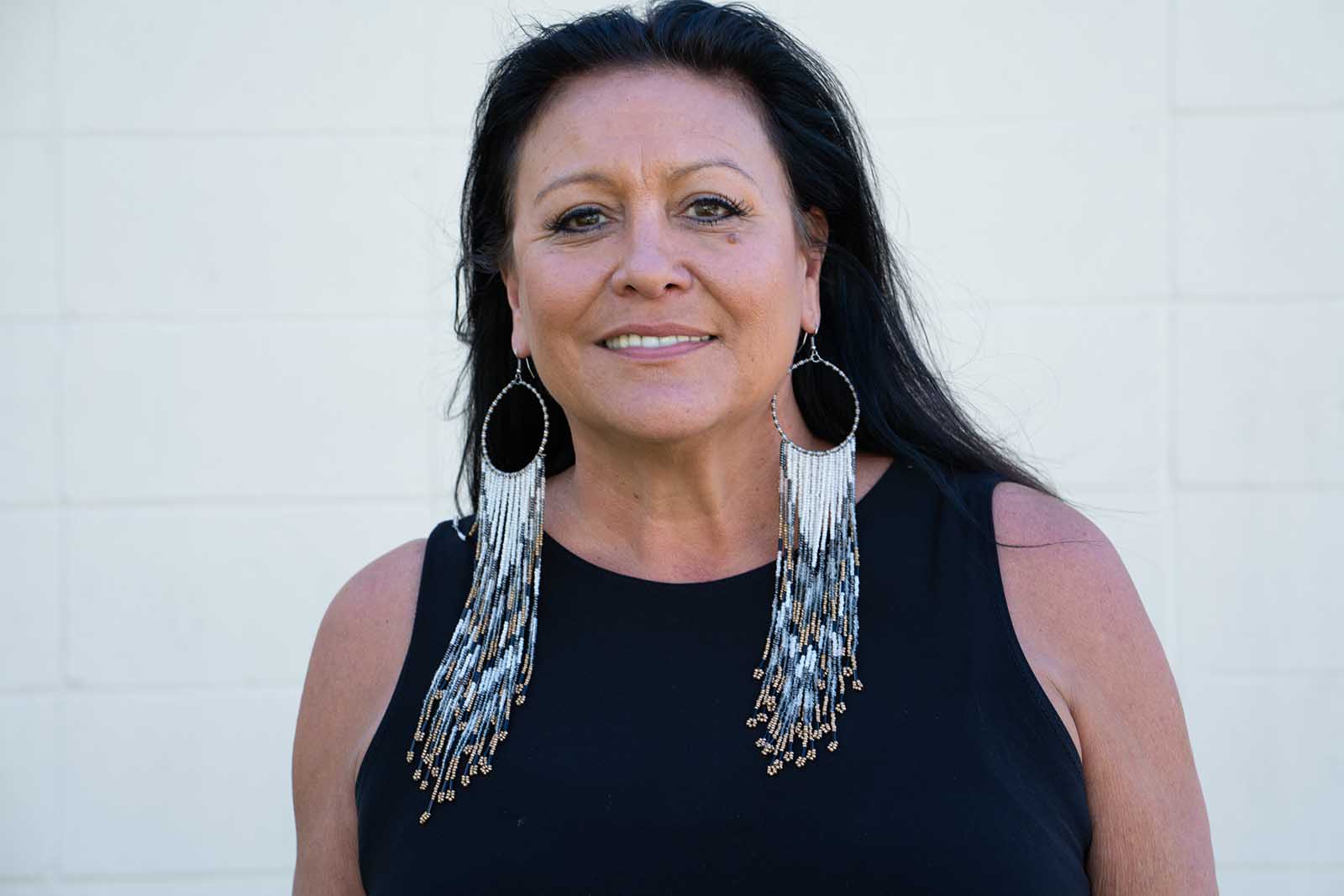
Ramona Kitto Stately
Ramona Kitto Stately is an enrolled member of the Santee Sioux Dakhóta Nation. She has a BA in Dakota Art and Culture and a MAE in Teacher Leadership. She is Project Director for We Are Still Here Minnesota and serves as chairperson of the Minnesota Indian Education Association. Ramona was a recipient of the 2021 Ron McKinley Award from Minnesota Education Equity Partnership and the 2023 McKnight Culture Bearers Award. She currently serves on the Indigenous Elder Advisory Board for Carleton College.
Fern Naomi Renville
Fern Naomi Renville is an artist, storyteller, enrolled citizen of the Sisseton Wahpeton Oyate, and seventh-generation descendant of Chief Gabriel Renville. Born on the Lake Traverse Reservation in South Dakota, Fern currently lives and works in Saint Paul as an educator sharing music, story, and land-based learning to promote greater understanding and knowledge of Dakota people.
Frequently Asked Questions
How long is the experience?
The experience is a full day, typically running from approximately 8:30 a.m. to 2:30 p.m. You will spend the morning at Bdote (Fort Snelling State Park), break for lunch on your own, and spend the afternoon at Wic̣aḣapi. More detailed logistics will be shared with registered participants.
Will we be outdoors for the entire experience?
Yes. The experience takes place outdoors at both sites. Please dress for the weather and wear comfortable shoes.
Will the experience be canceled if it rains?
No — the experience is held rain or shine. In cases of severe weather, you will be contacted with any necessary adjustments.
What happens if the confluence site is flooded?
Flooding is a possibility, as the park is located in a flood zone. If the Bdote is inaccessible, you will be contacted with instructions to meet at an alternative location. In the past, this has included the Two Rivers Overlook on Shepard Road, which provides a scenic observation point.
How much walking will there be?
You will walk no more than one mile over mostly flat terrain and have periods of standing. You are welcome to bring a small folding or camping chair for comfort. A small portion of the walk at Fort Snelling State Park is on an unpaved trail.
Is the experience accessible?
Parts of the experience may be challenging for individuals with limited mobility due to walking, standing, uneven terrain, and being outdoors for much of the day. Fort Snelling State Park has all-terrain track chairs that can be reserved in advance. If you have questions about accessibility or would like to discuss your needs, please contact Eden Bart (eden@mnhum.org).
What kind of content will be discussed?
You will engage with Dakota history, including creation stories, lifeways, the U.S.–Dakota War of 1862, and contemporary Dakota perspectives. The day is thoughtfully facilitated by Dakota educators and includes reflection, conversation, and connection to place. Some of the content may bring up strong emotions.
Can I bring my child or children?
This program is designed for adults and older teens. Younger children are not recommended due to the length of the day, the amount of standing and walking, and the seriousness of the content.
Are restrooms available?
Yes — there are restrooms at each site.
Is photography allowed?
Photography is allowed at the sites. To honor facilitator requests, video and audio recording of facilitators is not permitted.
Do you offer trips for student or other groups?
Private Bdote experiences can be arranged for organizations committed to engaging deeply with Dakota perspectives. Please see the Private Bdote Trips section for details.