Navigating the World History Eras
Content, Pedagogy, and Inquiry in the Classroom
About Navigating the World History Eras
Navigating the World History Eras: Content, Pedagogy, and Inquiry in the Classroom, presented by the Minnesota Department of Education (MDE) and the Minnesota Humanities Center (MHC), is a yearlong professional learning opportunity designed to support educators in implementing Minnesota’s 2021 K–12 Academic Standards in Social Studies.
This series offers educators a unique opportunity to learn from leading historians whose work explores diverse regions, cultures, and historical experiences across the globe. Through conversations with historians from Minnesota and beyond, educators will engage with current research, examine new perspectives, and explore ways to bring rich historical content and sources into their classrooms.
Each session is designed with teachers in mind—creating a space where academic scholarship meets classroom practice. Educators will deepen their content knowledge, discover new primary and secondary sources, and develop inquiry-based approaches for teaching world history.
Questions?
Have a question or comment about Navigating the World History Eras? Contact us at:
education@mnhum.orgContent and Pedagogy Sessions
Each month, educators will explore one historical era through two complementary lenses: an Online Content Session and an Online Pedagogy Session.
Educators are welcome to register for individual sessions that align with their interests and schedules—there’s no need to commit to all offerings. Join us for one or more sessions throughout the year.
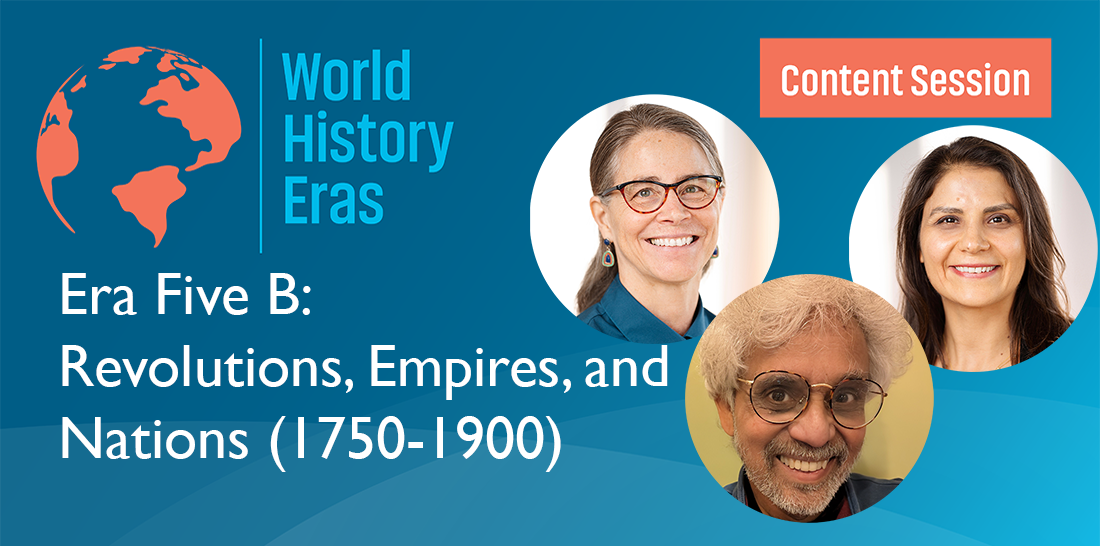
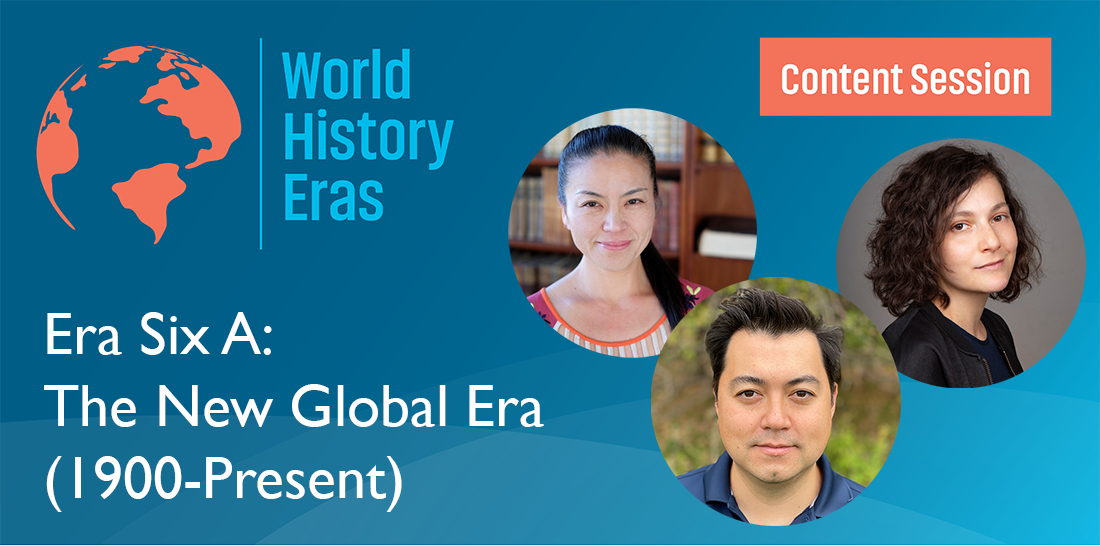
Content Sessions feature leading historians who will share their expertise, research, and perspectives on key historical eras and themes. Guided by Lead Scholar Dr. Katharine Gerbner, these sessions connect educators with current historical research while providing the context, sources, and thematic framing needed to bring world history to life in the classroom.
Intended Audience: Open to all K–12 educators interested in historical content and source-based instruction.
Dr. Katharine Gerbner is a historian of religion, race, and freedom in early America and the Atlantic world. She is the author of Archival Irruptions: Constructing Religion and Criminalizing Obeah in Eighteenth-Century Jamaica (2025) and Christian Slavery: Conversion and Race in the Protestant Atlantic World (2018). Her current research explores the history of religious freedom, examining how labor systems and emerging technologies have shaped definitions of religion and freedom from the First Amendment to the age of AI. She is Associate Professor of History and Director of Religious Studies at the University of Minnesota.
Pedagogy Sessions are led by Lead Teacher Brittany Rawson-Haeg, MDE Social Studies Content Specialist, in collaboration with a cohort of educators. Building on the ideas, sources, and perspectives shared during the content sessions, these hands-on workshops help teachers translate historical scholarship into classroom practice.
Educators will explore inquiry-based teaching strategies, learn from other educators about approaches to classroom implementation, and develop ideas for engaging students in meaningful historical thinking.
Intended Audience: Designed for high school World History teachers; also relevant for 8th grade educators.
Brittany Rawson-Haeg is the Social Studies Content Specialist at the Minnesota Department of Education, where she supports implementation of Minnesota’s K–12 Academic Standards in Social Studies. She began her career as a high school social studies teacher in Brooklyn, New York, before teaching middle and high school social studies in the Twin Cities. Prior to teaching, she served as a staff assistant in the New York City Department of Education’s Office of Intergovernmental Affairs. Brittany believes in the power of social studies education to help students develop greater empathy, deepen their understanding of the world, and become engaged civic participants.
The Asynchronous World History Eras Course provides educators with access to recorded content and pedagogy sessions from Navigating the World History Eras. Course materials will be released periodically throughout the year following the live sessions, allowing educators who are unable to attend live to engage with the series content.
Educators who attend live sessions will have the opportunity to participate in conversations with historians and colleagues, engage with the content as it unfolds throughout the year, and access materials as they are introduced.
Intended Audience: Open to all K–12 educators interested in historical content and source-based instruction.
Enhance Content Knowledge
Build deep understanding of key historical eras, events, and themes.
Strengthen Pedagogical Skills
Learn how to develop inquiry-based, standards-aligned lessons using diverse historical sources.
Encourage Connection and Access
Connect with educators statewide and revisit recorded sessions through a dedicated Canvas platform.
By participating in this series, educators will:
- Develop inquiry-rich unit and lesson frameworks
- Access scholar-curated lists of primary and secondary sources
- Practice strategies to engage students in critical historical thinking
- Join a statewide educator network rooted in collaborative learning
- Access MDE-hosted Canvas courses, including:
- Archived recordings of all content and pedagogy sessions
- Curated source sets aligned to each historical era
- Standards-aligned planning templates and tools
- Peer discussion forums and collaboration spaces
- Support from MDE staff for questions and feedback
Journey Through Six World History Eras
Over the course of the year, educators will explore six major World History Eras through the expertise of leading historians, rich primary and secondary sources, and inquiry-based instructional approaches. Together, these sessions provide opportunities to examine each era in depth while connecting historical scholarship to classroom practice.
The six World History eras:
- Era One: Early Human History (250,000 BCE–2,000 BCE)
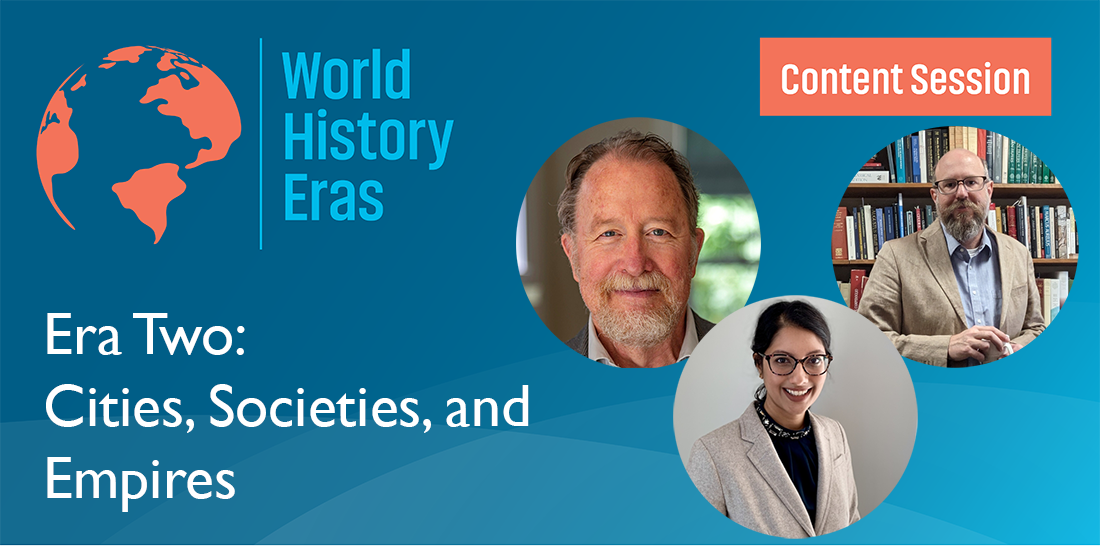
- Era Two: Cities, Societies, and Empires
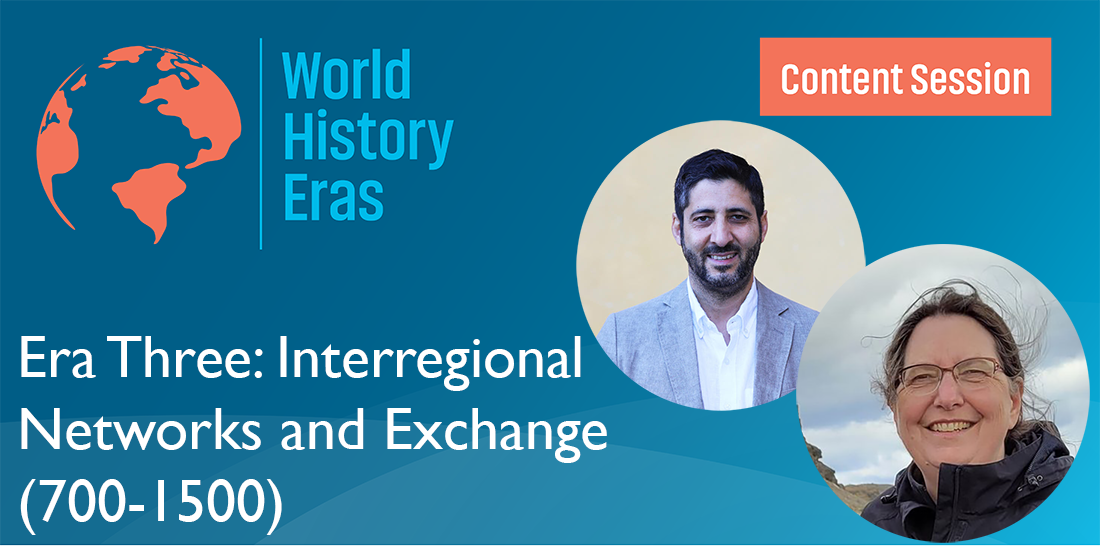
- Era Three: Interregional Networks and Exchange (700–1500)
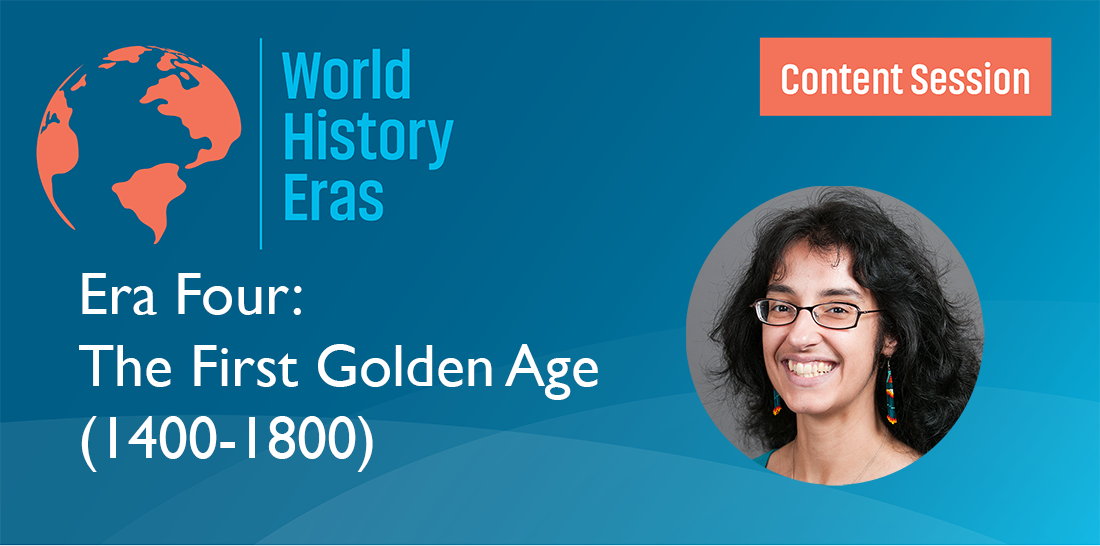
- Era Four: The First Golden Age (1400–1800)
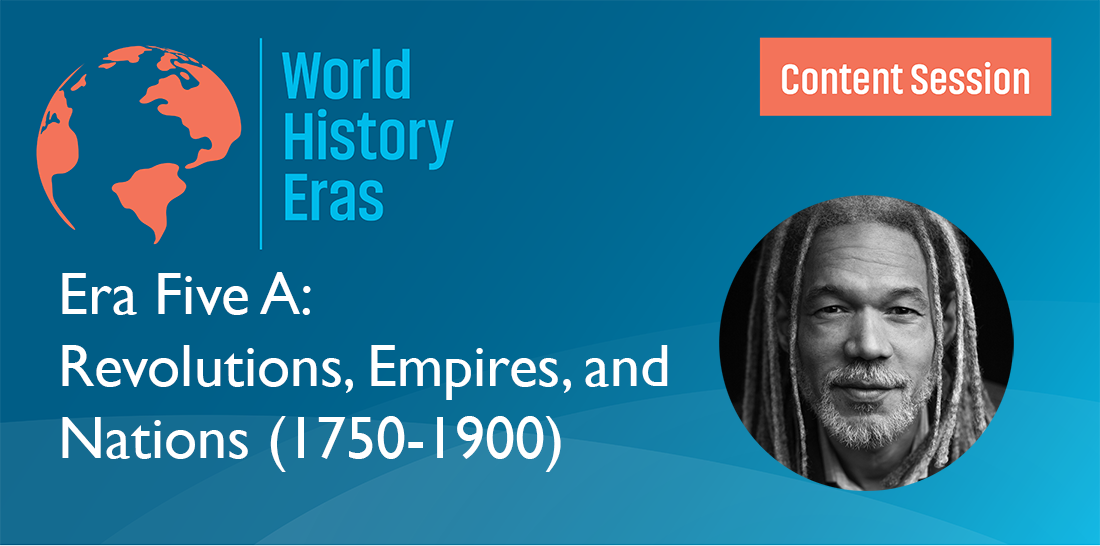
- Era Five: Revolutions, Empires, and Nations (1750–1900)
- Era Six: The New Global Era (1900–Present)
Events
List of events in Photo View
-
-
Online – Content Session – World History Era Two: Cities, Societies, and Empires
Virtual Event–Free -
Online – Pedagogy Session – World History Era Two: Cities, Societies, and Empires
Virtual Event–Free -
-
-
Online – Content Session – World History Era Four: The First Golden Age (1400–1800)
Virtual Event–Free -
Online – Pedagogy Session – World History Era Four: The First Golden Age (1400–1800)
Virtual Event–Free -
-
-
-
-